Retarders for Oil Well Cementing
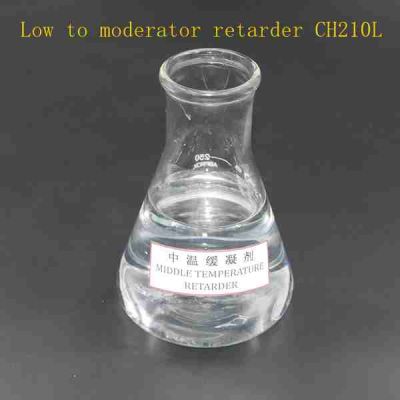
Our range of oilwell cementing retarders is engineered to extend the thickening time of cement slurries in a variety of well conditions. From low-temperature applications to ultra-high temperature environments, these additives ensure optimal pumpability and predictable setting times for complex cementing operations.
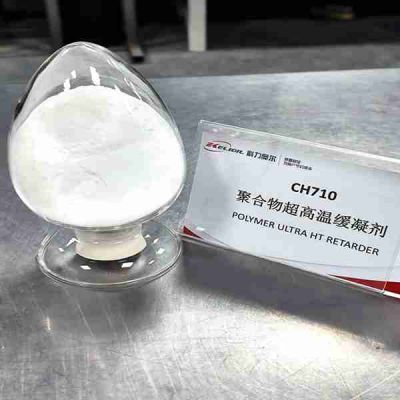
The CH610 and CH710S series represent a high-performance class of synthetic polymer retarders specifically engineered for complex oilwell cementing environments. Unlike traditional lignosulfonates, these synthetic polymers offer superior thermal stability and predictable linear thickening responses, making them essential for high-temperature and high-pressure (HTHP) applications.
The molecular structure of CH710S is designed with high-energy carbon-carbon backbones that resist thermal degradation. This allows the slurry to maintain a stable "induction period" even in ultra-deep wells where bottom-hole circulating temperatures (BHCT) exceed 180°C.
One of the primary challenges in cementing is the "right-angle set" or unpredictable thickening. CH610 provides a highly predictable, linear relationship between dosage and thickening time. This precision allows engineers to fine-tune slurry designs for specific well depths without the risk of premature setting.
While these polymers effectively extend pumpability, they are engineered to minimize the "over-retardation" of early-age compressive strength development. Once the induction period ends, the cement achieves rapid strength development, reducing Wait-on-Cement (WOC) time.
Both CH610 and CH710S act synergistically with fluid loss additives. By improving the dispersion of cement particles and stabilizing the polymer matrix, they help maintain lower fluid loss rates under high-pressure conditions.
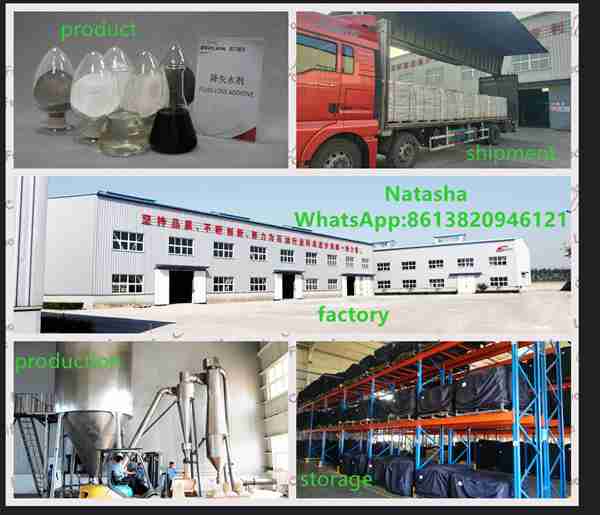
Established in 2006, Tianjin Kelioil Engineering Material and Technology Co., Ltd. is a high-tech enterprise specializing in the independent R&D and large-scale production of oilfield cementing additives.
...[read more]